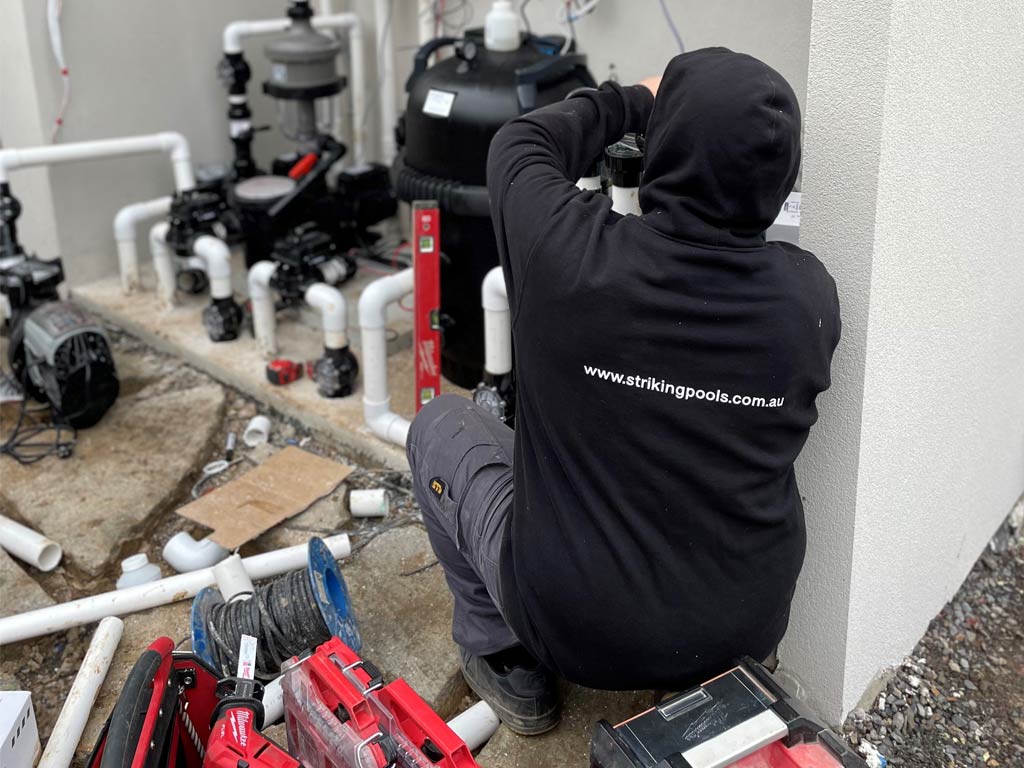
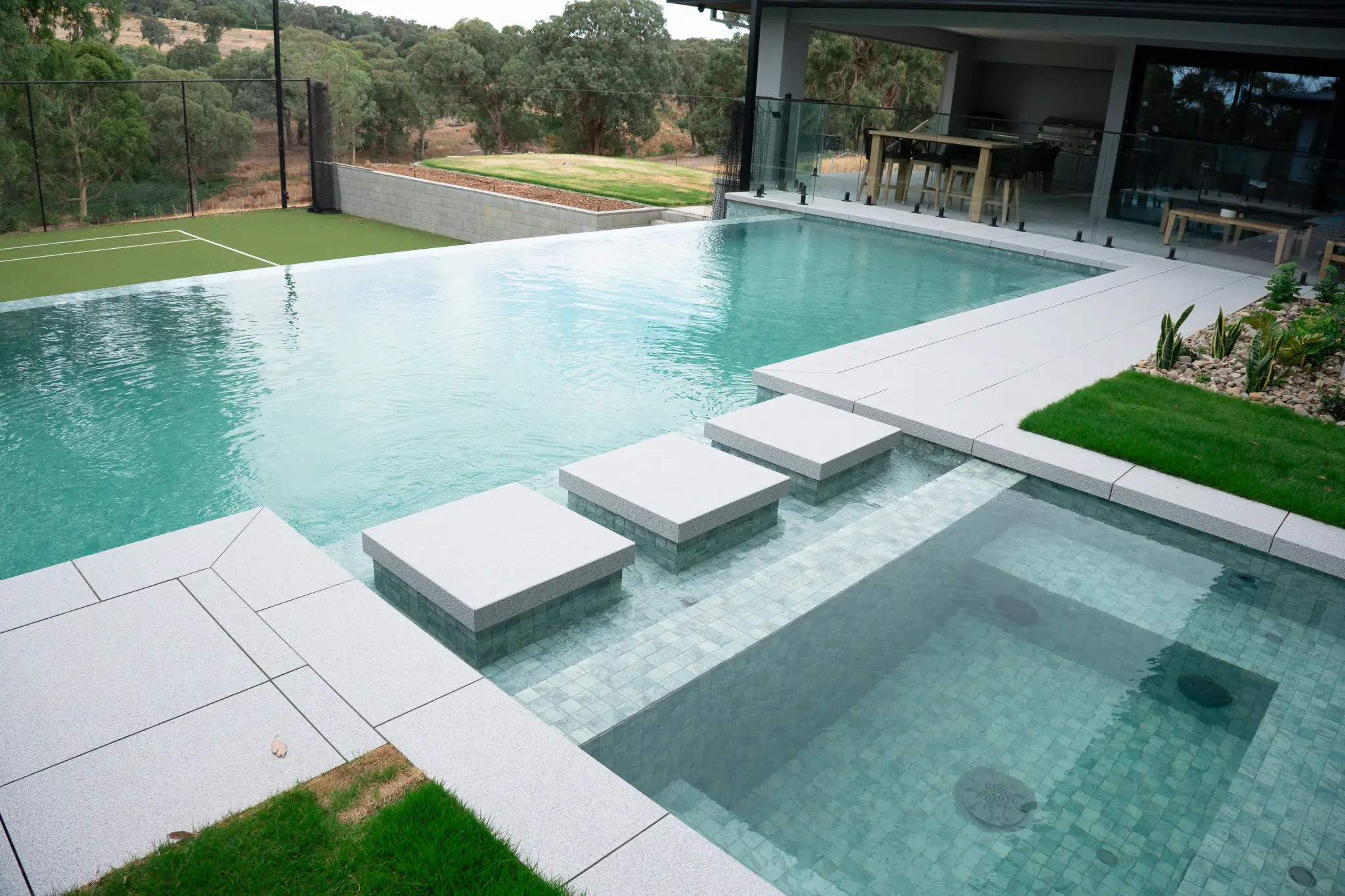
A clear, inviting pool doesn’t happen by accident. Behind the scenes, your pool pump works every day to circulate water through the filtration system, helping remove debris and maintain healthy swimming conditions.
Because it runs for hours at a time, it’s one of the hardest-working components of any pool system. But how long does it last?
Understanding how long pool pumps last can help homeowners plan pool maintenance, avoid unexpected equipment failures, and keep their pool operating efficiently.
Which is why in this article, we’ll explore how long pool pumps typically last, the factors that may affect their lifespan, and how you can help maintain them.
Worried your pool isn’t performing as it should? Contact our team at Striking Pools today. With 40 years of combined experience, we help keep pool systems running efficiently and reliably.
The Heart of Your Pool System
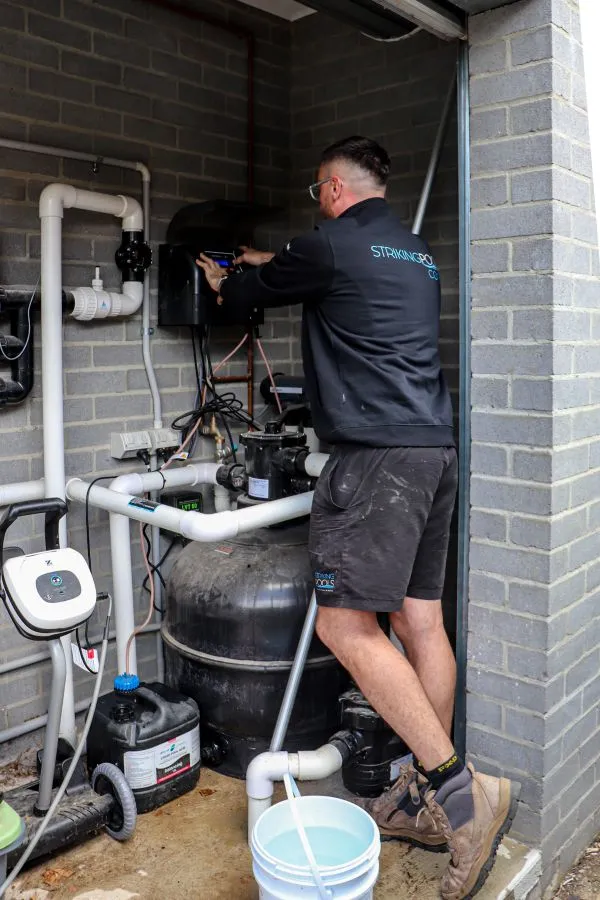
Your pool pump is crucial to maintaining your pool system. It continuously draws water from the pool, pushes it through the filtration system, and returns clean water back into circulation.
This process helps remove debris, distribute sanitising chemicals evenly, and maintain the clear, healthy water swimmers expect. It removes contaminants and supports safe swimming conditions in residential pools.
The Average Lifespan of a Pool Pump
Pool pumps are designed to run for many hours each day, so it’s normal for components to wear over time. On average, residential pool pumps may last 8 to 12 years before replacement is necessary, although the motor may wear out earlier depending on usage, maintenance and type.
Types of Pool Pumps
Different types of pool pumps operate in different ways, and this may influence how much strain is placed on the motor over time.
Single-Speed Pumps
Single-speed pumps run at full power at all times. Because they cannot adjust their speed, the motor experiences constant strain each time the pump runs. Over time, this continuous high-speed operation may contribute to increased wear on the motor and internal parts.
Dual-Speed Pumps
Dual-speed pumps allow the pump to run at either high or low speed. The lower setting is typically used for everyday filtration, which may reduce the motor load. Running at lower speeds for longer periods may help reduce wear compared with single-speed pumps.
Variable-Speed Pumps
Variable-speed pumps allow the motor speed to be adjusted depending on the pool’s needs. Because these pumps often run at lower speeds for most of the day, they may place less strain on the motor and internal components.
In addition to potential longevity benefits, variable-speed pumps are significantly more energy-efficient.
What Factors Affect Pool Pump Lifespan?
While most pool pumps may last around a decade, their lifespan can vary depending on several factors, including:
Pump Runtime
The more hours a pump runs each day, the more wear its motor and internal components may experience. During warmer months, many Australian pools run their pumps for several hours daily to maintain proper circulation and filtration, which gradually contributes to mechanical wear over time.
Water Chemistry
Maintaining balanced pool water is important not only for swimmers but also for protecting pool equipment. Poor water chemistry may contribute to corrosion, scale build-up, or deterioration of seals and internal components.
Pump Quality and Installation
The quality of the pump itself, along with proper sizing and installation, may also affect longevity. An undersized pump for the pool may need to work harder to circulate water, while improper installation can lead to inefficient performance and increased strain on the system.
Maintenance and Cleaning
Regular maintenance may play a major role in extending pump life. Cleaning the pump basket, checking seals, and ensuring the filtration system is operating correctly may help reduce unnecessary strain on the motor and improve overall efficiency.
Signs Your Pool Pump may be Wearing out
Even a well-maintained pool pump will eventually begin to show signs of wear. Because the pump runs frequently to keep water circulating, small mechanical issues may gradually develop as components age.
Some common signs your pool pump may be wearing out include:
- Unusual Noises
Grinding, screeching, or rattling sounds may indicate worn bearings or internal motor issues. Pool pumps normally produce a steady humming sound, so sudden changes in noise may signal that parts are beginning to fail. - Reduced Water Circulation
If your pool water is taking longer to clear or the return jets feel weaker than usual, the pump may not be circulating water as effectively. Reduced flow may sometimes be caused by blockages, but it may also indicate declining pump performance. - Leaks Around the Pump
Water pooling around the pump housing may suggest worn seals, cracked fittings, or other component issues. Small leaks may worsen over time and may eventually affect the pump’s ability to operate correctly. - The Pump Struggles to Start
If the pump frequently fails to start, shuts off unexpectedly, or trips electrical circuits, there may be an issue with the motor, capacitor, or wiring. In some cases, these problems may indicate that the pump is approaching the end of its lifespan.
How to Extend Pump Life
While pool pumps naturally wear over time, regular maintenance may help extend their lifespan and keep the system operating efficiently. Simple routine care may reduce strain on the motor and support consistent water circulation.
- Clean the pump basket regularly
- Maintain balanced water chemistry
- Check for blockages or air leaks
- Schedule professional equipment checks
Need Help Keeping Your Pool Equipment Running Smoothly?
Keeping your pool pump and equipment in good condition may help prevent unexpected breakdowns and maintain clear, healthy water throughout the year.
Regular servicing and professional inspections may also help identify small issues early, before they turn into costly repairs.
If you need assistance with pool maintenance or equipment checks, reach out to the team at Striking Pools. With experienced technicians and a strong focus on reliable service, we help homeowners keep their pools operating efficiently year-round.
From routine maintenance to equipment assessments and repairs, our team provides practical support to help protect the performance and longevity of your pool system.