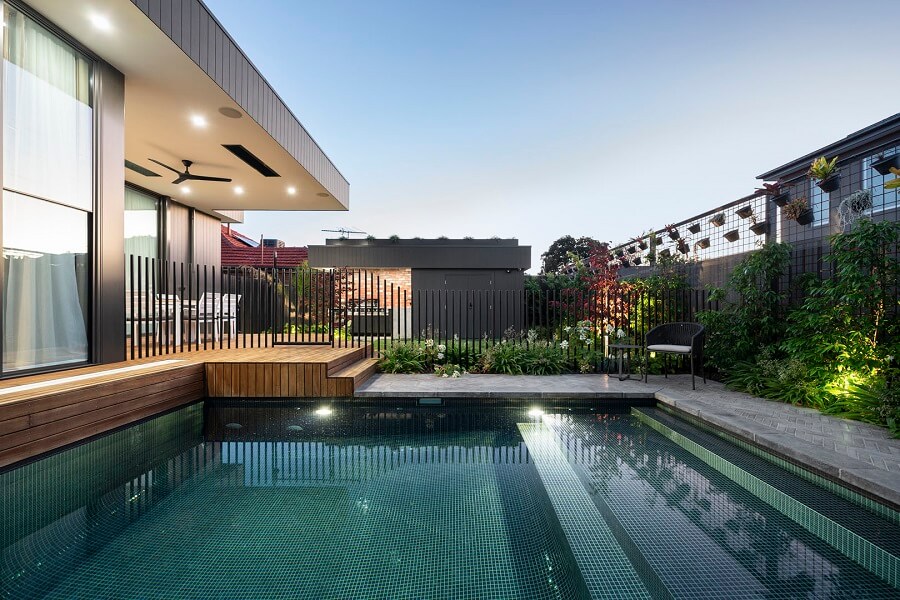
There is something different about stepping into a magnesium pool. The water feels silkier, and you tend to leave feeling more relaxed than when you arrived.
This isn’t your imagination at play; magnesium pools, also known as mineral pools, are quietly changing the way homeowners in Melbourne perceive a luxurious, indulgent pool experience.
If you’re in the process of designing or building a custom concrete pool and want to understand your options for water treatment, here’s what you need to know and why so many pool owners want them.
If you are looking for personalised advice on thoughtfully designed and constructed pools, contact our team at Striking Pools today.
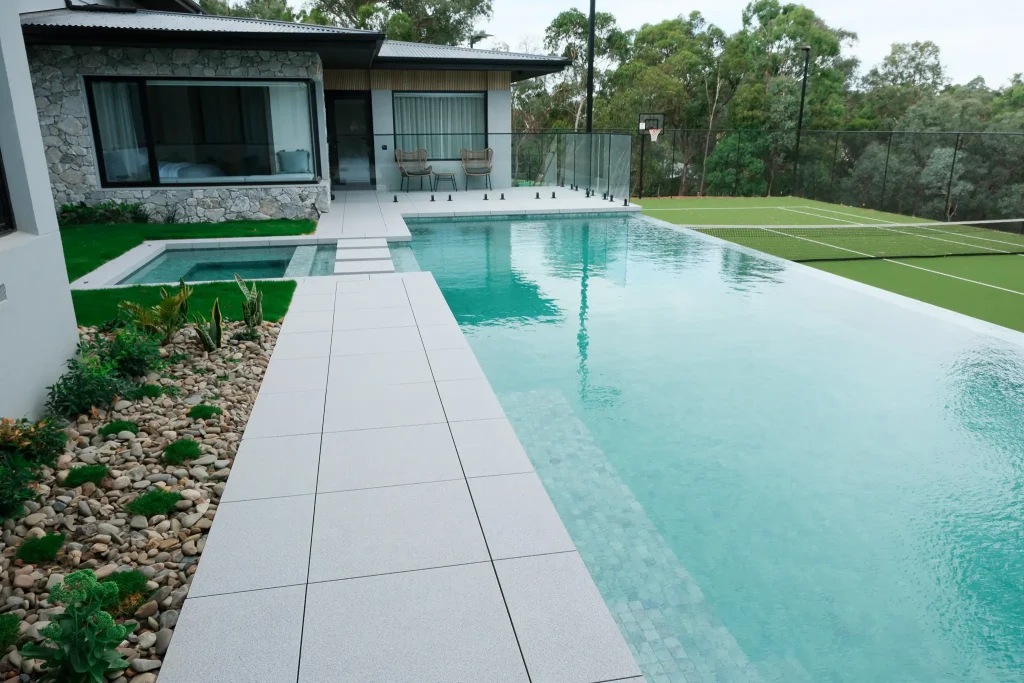
What Is a Magnesium Pool?
A magnesium pool is a swimming pool that uses magnesium chloride as its primary mineral compound for water treatment. Rather than relying on high concentrations of traditional chlorine, the pool water is infused with a blend of minerals, with magnesium chloride playing the central role.
Because these are compounds naturally found in seawater and brine, made up of magnesium (a mineral) and chloride (an electrolyte), together, these two components sanitise the pool water while making it feel softer and more enjoyable to swim in.
The terms “magnesium pool” and “mineral pool” are often used interchangeably, and for good reason. Most mineral pool systems centre on magnesium chloride, which is why the two have become synonymous in the industry.
How Does it Work?
At its core, this type of pool works through a two-part process: electrolysis and flocculation.
A chlorinator cell uses electrolysis to convert magnesium chloride into small amounts of chlorine, typically between 0.5 and 1.0 parts per million, which is sufficient to sanitise the water without strong odours or irritation.
Separately, magnesium acts as a natural flocculant, binding to microscopic impurities in the water, causing debris to clump together so the filtration system removes it more easily.
To put that into perspective, a traditional salt or chlorine pool typically maintains chlorine levels of around 2.0 to 3.0 parts per million. At the lower concentrations found in a magnesium system, chlorine is almost undetectable by swimmers.
The result is water that is clean, clear, and noticeably more comfortable to be in. Minerals only need to be replenished when water is lost or fresh water is added to the pool, making ongoing pool maintenance relatively straightforward.
What is the Swimming Experience Like?
The most immediate difference is the feel of the water itself. Rather than the harsh sensation associated with traditionally chlorinated water, the water in a magnesium pool feels distinctively smooth, buoyant, and silky.
The reduced surface tension means you glide through the water almost effortlessly, and your eyes stay comfortable with minimal irritation.
There is also an absence of the familiar sharp chlorine smell. Because chemical levels are dramatically lower, you will not emerge from a magnesium pool with that lingering chemical scent on your skin or in your hair.
For many swimmers, this alone is a significant quality-of-life improvement.
The water also appears notably clearer. Because of the way magnesium interacts with water and filtration systems, it does an outstanding job of filtering out tiny micro-particles that cause pool water to appear slightly discoloured or murky.
The Benefits of Having a Magnesium Pool
Gentler on Skin and Hair
One of the most celebrated benefits is the effect on skin. Magnesium is known for its gentle properties, making it much kinder to the skin than traditional chlorine.
For people with sensitive skin conditions such as eczema or psoriasis, a magnesium pool may offer some relief from the irritation and dryness that higher chlorine concentrations can cause.
Swimmers also report smoother, softer hair after regular use, as the mineral is less harsh on hair follicles.
Muscle Relaxation and Recovery
Magnesium in pool water is absorbed in small amounts through the skin, and may provide relief for aching joints and help soothe sore muscles, and may be a good choice if you are active or experience general muscle tension.
The combination of buoyancy and mineral absorption creates a naturally restorative swimming environment.
Stress Reduction and Better Sleep
Magnesium may also be a great way to relieve stress. Swimming in a magnesium-enriched pool may help the body metabolise cortisol more efficiently, leaving swimmers feeling more relaxed after a session.
Research also suggests that higher magnesium levels may improve sleep quality, which is particularly beneficial for anyone who experiences sleep disturbances.
A Gentler Environment for Everyone
Because magnesium pools produce less irritation than chlorine, they tend to suit people of all ages, including children and older adults. There is no lingering chemical smell, no red eyes, and no dry skin after swimming.
For families who plan to spend a great deal of time in their pool, this usually amounts to a meaningful difference in their experience.
Reduced Chemical Use
Magnesium pools require fewer chemicals for water maintenance compared to traditional chlorine pools. The natural purification process reduces the need for high levels of chlorine or other harsh chemicals, making it easier to maintain water balance and creating a more environmentally considered pool environment.
A Few Practical Considerations
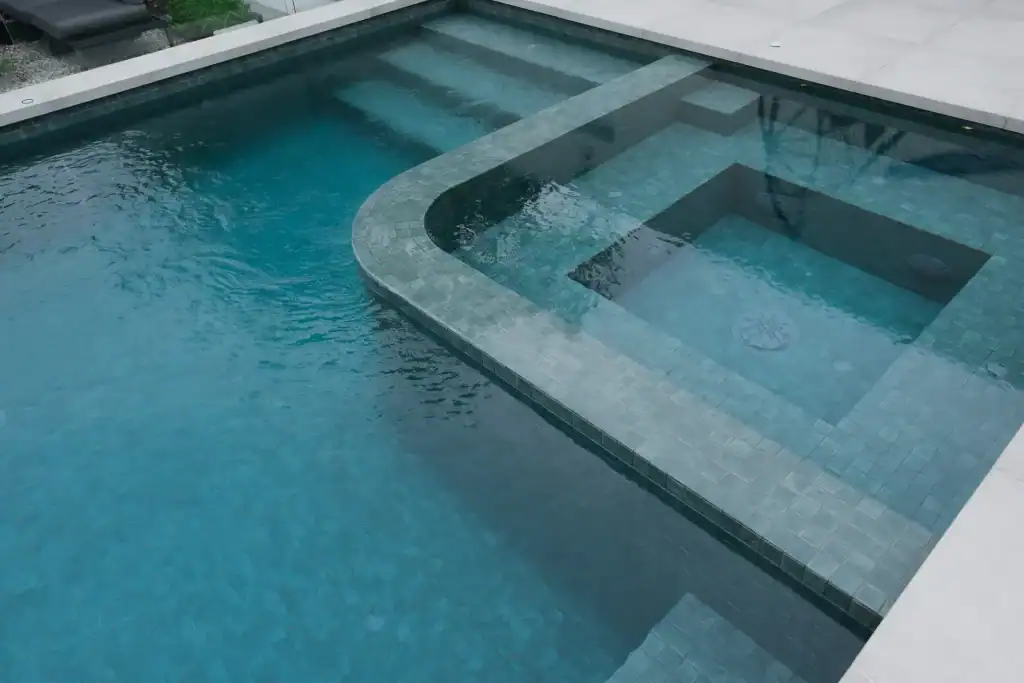
A magnesium pool does not require a different pool structure or special shell material. In terms of design and build, a magnesium pool is like any other.
The distinction lies in the water treatment system rather than the construction itself. This makes the decision to go with magnesium one you can make independently of the structural build.
It is also worth understanding that a magnesium pool is not entirely chemical-free. A small amount of chlorine and bromine is still required to kill bacteria and viruses and help prevent algae blooms.
The levels required, however, are significantly lower than a standard chlorine pool, low enough that they do not meaningfully affect water quality or the swimmer’s experience.
Running costs are generally comparable to, or lower than, a saltwater pool over time, and the mineral blend needs replacing less frequently than most pool owners expect.
Is a Magnesium Pool Right for Your Custom Build?
The answer will depend on your priorities and lifestyle.
If you value a more refined, spa-like swimming experience with lower chemical exposure, softer-feeling water, and potential skin and wellness benefits, then a magnesium system is well worth serious consideration.
It is also worth noting that a beautifully engineered pool deserves equally thoughtful water treatment. The investment you make in quality design and construction should be matched by the experience you have in the water every day.
Build Your Dream Pool with Striking Pools
At Striking Pools, we bring over 40 years of combined experience to every custom concrete pool and spa we create across Melbourne and its surrounding suburbs. No prefabrication, no pre-cast work. Every pool is designed and built around your property, your lifestyle, and your vision.
If you are exploring a luxury outdoor space that integrates world-class pool design with thoughtful landscaping and meticulous construction, we would love to talk through your project.