Commercial concrete pools in Melbourne demand a blend of structural engineering, thoughtful finishes, and system-level automation to deliver lasting performance and low operational costs. This article reveals the practical “secrets” behind durable, low-maintenance commercial pool design and explains how these choices reduce lifecycle costs, downtime, and maintenance labour for hotels, resorts, fitness facilities, and corporate estates. Readers will learn core principles of structural reinforcement, waterproofing strategies, finish selection, smart filtration, and automation alongside practical compliance steps for Victoria and an outline of a commercial pool builders project timeline.
Early in the guide, we also introduce how Striking Pools Pty Ltd approaches high-value commercial projects with bespoke concrete solutions and an integrated in-house design team, inviting property owners to request a consultation or quote for complex builds. The following sections cover why specialist concrete builders matter, structural and finishing best practices, low-maintenance system choices, the project process with Striking Pools, Victorian regulatory essentials, and real project outcomes that demonstrate measurable operational benefits.
Why Choose Striking Pools for Commercial Pool Construction in Melbourne?
Choosing a specialist commercial concrete pool builder reduces the risk of premature failures and ensures finishes, systems, and warranties align with heavy-use business environments. Striking Pools Pty Ltd positions itself as a boutique, multi-award-winning specialist focused exclusively on custom concrete pools and spas with end-to-end services from integrated design through long-term pool care and financing, which is valuable for owners needing a single accountable partner.
The team model pairs landscape architects, designers, and builders to align operational needs, guest experience, and durability objectives, reducing coordination delays and mismatches between aesthetic intent and constructability. For commercial owners, this integrated approach limits unknowns during procurement and helps control lifecycle costs through coherent specification and commissioning practices.
Striking Pools’ specialist focus produces several client advantages in commercial contexts:
- Bespoke concrete solutions tailored to site loads, soil conditions, and usage patterns, ensuring long-term structural performance.
- In-house integrated design and construction teams that streamline approvals, coordination, and quality control.
- Full lifecycle services, including design, construction, pool care, and financing options to reduce procurement friction.
These capabilities support commercial briefs that demand both luxury presentation and robust operational performance, and they form the basis for requesting a tailored consultation or quote for high-value commercial projects.
What Expertise Makes Striking Pools a Leader in Commercial Concrete Pools?
Striking Pools combines specialised concrete pool expertise with an integrated team of landscape architects, designers, and builders to translate complex commercial briefs into durable, buildable solutions. The company’s focus on concrete-only construction means methods, specifications, and supply chains are optimised around cast-in-place and fully tiled concrete shells, which are standard practice for bespoke commercial pools that require complex shapes, infinity edges, or acrylic windows.
This design-build integration reduces information loss between architects and contractors and enables early identification of structural, waterproofing, and hydraulic requirements that affect lifecycle performance. For commercial clients, technical depth in concrete engineering and finishes translates into fewer latent defects, predictable maintenance regimes, and a clearer path to regulatory compliance.
How Does Striking Pools Ensure Luxury, Durability, and Efficiency in Commercial Pools?
Delivering luxury in a commercial pool requires finishes and features that age gracefully under heavy use while supporting efficient operation and low maintenance overheads. Striking Pools selects high-performance tile and render systems, designs robust concrete reinforcement, and specifies energy-efficient pumps and automation to balance guest experience with operating budgets. The emphasis on concrete shells allows for complex edges, integrated water features, and durable penetrations that are detailed to minimise leak risk and simplify servicing access.
By combining aesthetic detailing with specification choices aimed at serviceability, Striking Pools helps owners achieve visually striking pools that remain cost-effective to operate over the lifecycle of the asset.
What Are the Secrets to Durable Commercial Pool Design?

Durability in commercial pool design stems from three core domains: structural integrity of the concrete shell, robust waterproofing and finish selection, and design details that prevent common failure modes. Structural choices such as concrete grade, reinforcement layout, and footing design control how a pool responds to loading cycles, soil movements, and thermal stress.
Waterproofing systems and tile/finish methods protect the concrete from aggressive water chemistry and mechanical wear, reducing the probability of leaks and costly repairs. Detailing around penetrations, expansion joints, and dynamic features like infinity edges is equally critical because small failures at details often lead to disproportionate maintenance demands.
Key structural and detailing “secrets” that protect longevity:
- Specify appropriate concrete grade and compressive strength: higher engineer-specified MPa for commercial shells reduces cracking under repeated loads.
- Layered reinforcement strategy: combining rebar cages with welded mesh and anchored connections mitigates differential settlement and movement.
- Detail expansion joints and penetrations: flexible, sealed joints and accessible penetration boxes reduce leak risk and simplify future maintenance.
- Design for maintainable access: service voids, removable panels, and accessible plantrooms reduce downtime for repairs and servicing.
These principles guide the structural and finish decisions that ultimately determine a pool’s service life and operational reliability.
Durability and Repair of Concrete Structures
The primary objectives of the initial phase of this investigation were to identify and evaluate various abrasion-erosion-resistant materials for repairing and improving the durability of concrete stilling basin slabs, b develop optimum techniques for repair and rehabilitation of stilling basins, and to develop guidance for designing stilling basin exit configurations to avoid entrapping abrasive materials within the basin.
Durability of concrete structures and constructions: silos, bunkers, reservoirs, water towers, retaining walls, 2003
The principles of repair, products, and material durability are crucial for structural applications in swimming pools, as emphasized in engineering literature.
Durability of Engineering Structures for Swimming Pools
Durability of engineering structures: Design, repair, and maintenance. The principles of repair, the products, and the durability of materials are essential for structural applications in indoor swimming pools, as detailed in this book.
Durability of engineering structures: Design, repair and maintenance, 2003
How Does Structural Integrity and Concrete Reinforcement Enhance Pool Longevity?
Structural integrity begins with engineering the shell to resist imposed loads, hydrostatic pressure, and differential settlement typical at commercial sites. Engineers select concrete mixes and compressive strengths appropriate for the design life and usage patterns, and reinforcement (rebar cages, mesh, and dowels) is arranged to control crack widths and distribute loads.
Properly designed footings and substrate preparation reduce settlement risk that can propagate hairline cracking into structural leaks, and anchored connections at walls and floor intersections maintain continuity under thermal and load cycles. These design decisions decrease the frequency of remedial works and help keep lifecycle repair costs predictable, which is essential for commercial operators managing budgets and availability.
| Structural Element | Attribute | Value / Why It Matters |
| Concrete Mix | Compressive strength (engineer-specified MPa) | Higher MPa increases crack resistance under heavy use and thermal cycling |
| Reinforcement | Rebar + welded mesh + anchoring | Distributes loads, controls crack widths and improves shell ductility |
| Footing/Foundation | Subgrade preparation & drainage | Minimises differential settlement and long-term movement risks |
The table above summarises how discrete structural choices contribute to longevity and why they are standard practice in well-designed commercial concrete pools. Careful specification here reduces maintenance frequency and extends service life.
What Advanced Waterproofing and Finishing Techniques Protect Commercial Pools?
Waterproofing and finishes create the barrier between aggressive pool water and the concrete shell; high-performance membranes, cementitious renders, and correctly specified tile/grout systems are foundational for durability. Liquid-applied membranes or bonded sheet membranes combined with a robust render system control water ingress, while specifying acid-resistant grout and slip-resistant tile for walkable areas improves wear performance.
Attention to detailing flashing at water features, sealed penetrations for lighting and jets, and sacrificial wear elements prevents small failures from escalating. Regular inspection intervals focused on joints, grout lines, and mechanical penetrations ensure minor issues are detected early and maintenance remains predictable rather than reactive.
Concrete Repair and Durability for Erosion-Damaged Structures
A variety of materials, including armored concrete, conventional concrete, epoxy resins, fiber-reinforced concrete, and polymer-impregnated concrete, were used with varying degrees of success in the 31 repairs reported. The degree of success was generally inversely proportional to the degree of exposure to those conditions conducive to erosion damage. These materials have been used with various construction procedures, including dewatering and underwater repairs.
Maintenance and Preservation of Concrete Structures. Report 2. Repair of Erosion-Damaged Structures, 1980
How Can Commercial Pools Be Designed for Low Maintenance and Cost Efficiency?

Low-maintenance commercial pools result from combining intelligent hydraulics, automated water treatment, and durable finishes that minimise cleaning and repair cycles. Systems-level planning optimised pump sizing, efficient filtration, automated dosing, and in-floor cleaning reduces manual labour and chemical waste while maintaining water clarity and regulatory compliance.
Selecting finishes that resist staining and abrasion reduces scrubbing time, and integrating sensors and controllers with facility management systems enables predictive maintenance, lowering unplanned downtime. These measures collectively reduce operating expenses and improve the predictability of annual maintenance budgets for owners and operators.
Commercial low-maintenance strategies include these practical measures:
- Smart filtration and automated chemical dosing: stabilise water chemistry and reduce manual testing frequency.
- Robotic and in-floor cleaning systems: remove debris proactively and lower manual cleaning labour.
- Energy-efficient circulation design: optimised head loss and pump selection reduce energy consumption and operating cost.
Adopting multiple strategies in concert rather than a single solution delivers the best return on investment through reduced labour, lower chemical consumption, and less downtime.
What Smart Filtration and Automated Water Treatment Systems Reduce Maintenance?
Smart filtration paired with automated dosing systems stabilises water chemistry and reduces the frequency of manual intervention required to keep pools operational. Options such as high-efficiency filters with backwash optimisation, cartridge or DMF-style technologies, and continuous monitoring sensors for pH and disinfectant levels cut chemical usage and maintain consistent setpoints that prevent accelerated finish degradation.
Automated controllers can log performance, trigger alarms, and integrate with building management systems to centralise maintenance tasks and reporting. For commercial facilities, these systems reduce labour costs, lower chemical expenditure, and improve regulatory record-keeping while safeguarding guest experience.
| Filtration / Treatment | Maintenance Frequency | Typical Operational Benefit |
| High-efficiency filters | Monthly checks / optimised backwash | Reduced energy and water use during cleaning |
| Automated dosing systems | Low daily intervention | Stable chemistry; reduced chemical spikes |
| Continuous sensors & BMS integration | Remote monitoring & alerts | Faster fault detection; predictive maintenance |
The comparison above shows how the choice of filtration and monitoring affects maintenance cadence and operational savings for commercial pools.
How Do Robotic Cleaners and Automated Pool Systems Minimize Upkeep?
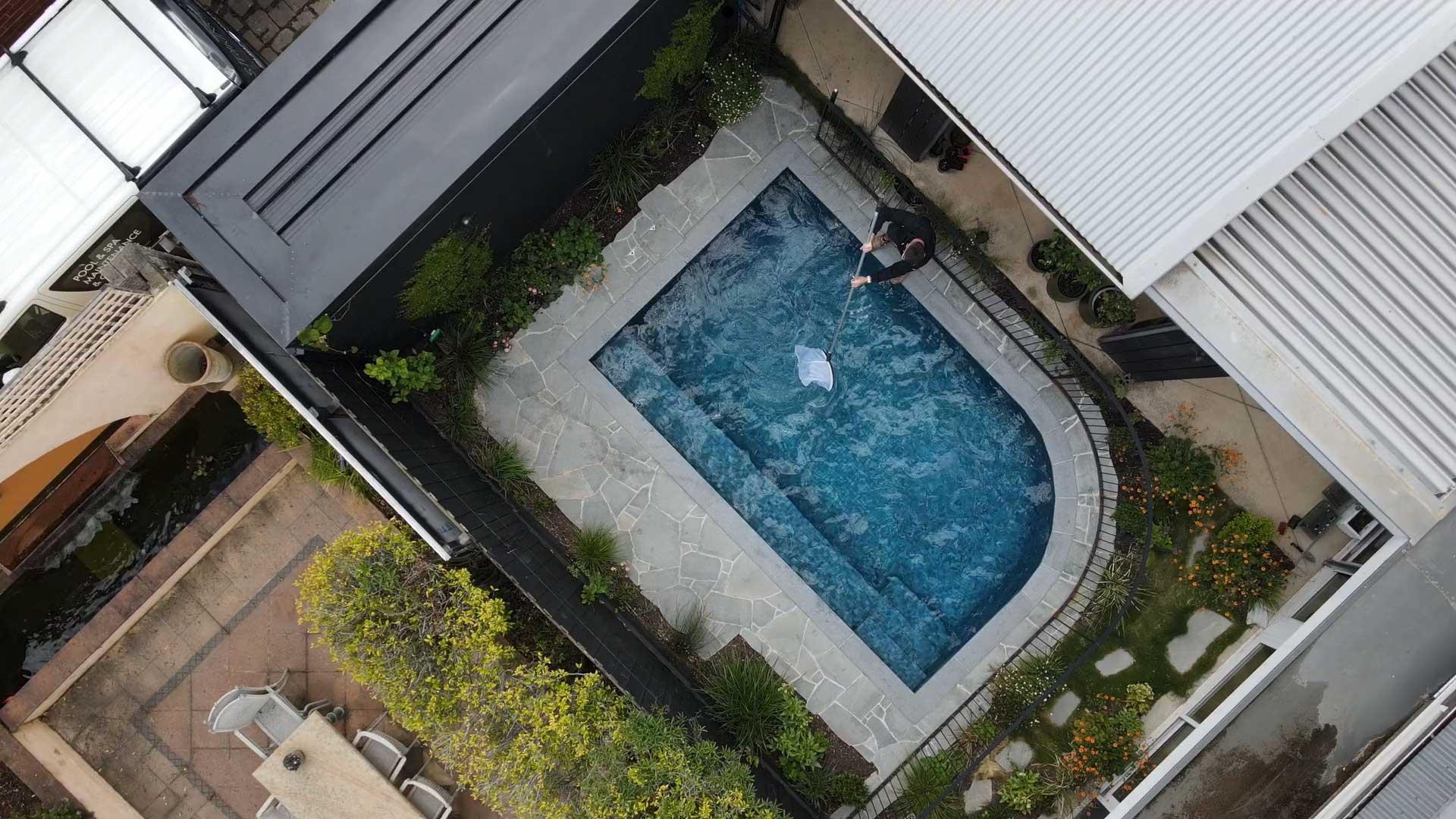
Robotic cleaners and in-floor cleaning systems remove sediment and biofilm with predictable cycles, dramatically reducing manual vacuuming and skimming requirements. Commercial-grade robotic units offer programmable schedules, remote monitoring, and targeted cleaning patterns to handle peak-season debris loads without staff intervention. In-floor systems assist circulation and debris conveyance to sumps, reducing skimmer clogging and filter loads.
Combined with automated scheduling and diagnostics, these tools lower labour needs and help maintain water quality during high-occupancy periods while extending the life of mechanical components by reducing abrasive strain.
What Is the Commercial Pool Building Process with Striking Pools in Melbourne?

A transparent, staged process reduces surprises and gives commercial clients control over costs, timelines, and compliance milestones. Striking Pools structures commercial projects around an enquiry-to-handover workflow that begins with a detailed site and operational briefing, moves through bespoke design and engineering, and progresses into staged construction, commissioning, and handover with training and ongoing support.
This staged approach ensures technical issues are resolved early, permits and approvals are coordinated, and the client receives a clear proposal and quote aligned to the agreed scope. For commercial owners, clarity at each milestone limits scope creep and provides definitive handover documentation for operations teams.
The typical client journey with Striking Pools follows these phases:
- Initial enquiry and site assessment: capture operational brief, site constraints, and regulatory needs.
- Custom design and engineering: produce tailored concrete shell, finishes, and plantroom design.
- Construction and quality assurance: staged build with inspection points and commissioning tests.
- Handover, training, and maintenance setup: deliver operation manuals, compliance records, and ongoing care plans.
This stepwise process provides predictable deliverables and creates opportunities for the client to request bespoke elements, costed options, and staged approvals as required. Striking Pools converts project enquiries into formal consultations, collaborative design sessions, and bespoke proposals that include detailed quotes, and clients initiate this process by requesting a consultation to establish scope and budget expectations.
How Are Commercial Pool Designs Customized to Business Needs and Brand Identity?
Designing a commercial pool for a hotel, resort, or corporate facility begins by aligning functional objectives, capacity, guest circulation, safety, and brand-led aesthetic goals such as material palettes and feature prominence. Architects and landscape designers set the spatial relationship to terraces, back-of-house access, and sightlines so the pool experience reinforces brand positioning while enabling practical operations like lifeguard coverage and cleaning access.
Materials and finishes are chosen to match the brand’s visual language yet meet maintenance and slip-resistance requirements. Embedding operational requirements into the brief opening hours, service windows, and staffing ensures the final design supports both guest experience and cost-effective maintenance.
What Are the Key Stages from Design to Construction and Handover?
A clearly defined timeline with milestones keeps commercial projects on track and provides clients with points for review and approval. Typical commercial milestones include design approval, engineering sign-off, permit acquisition, excavation, shell construction, waterproofing and finishes, plant installation, commissioning, and final statutory inspections. Each milestone has deliverables such as drawings, test results, and compliance documentation that the owner can review, and critical sign-offs reduce rework and associated costs. Transparent scheduling with buffer periods for inspections and weather-sensitive activities helps minimise delays and keeps opening dates realistic.
What Commercial Pool Regulations and Compliance Standards Apply in Melbourne?

Commercial pools in Victoria are subject to safety, water quality, and permitting requirements that protect public health and meet statutory obligations. Owners must satisfy local authority permit processes, meet water testing and record-keeping obligations, and apply safety controls proportional to the facility type and usage.
For commercial builds, coordination with certifiers, health authorities, and building permit processes is essential because statutory inspections occur at several pool construction and commissioning. Engaging a builder experienced in these compliance steps reduces the administrative burden on owners and helps ensure the facility opens on time and with required documentation.
The most relevant compliance focus areas for Victorian commercial pools include:
- Safety and operational controls tailored to pool type and patronage.
- Permitting steps and documentation required by local authorities.
- Water quality testing regimens and record-keeping obligations.
Owners starting a commercial project should begin with a compliance checklist to identify required permits and testing frequency, so these items are embedded into the project timeline from day one.
What Are the Victorian Safety and Permitting Requirements for Commercial Pools?
Victorian requirements typically cover facility safety measures, water quality monitoring, signage, and permit processes administered by local authorities and health units. Safety controls are scaled to usage, leisure pools, training pools, or spas requiring documented operational procedures, signage, and qualified staff where relevant. Permitting often requires submission of design documentation, structural calculations, and evidence of water treatment systems that meet performance standards. Regular water testing and retention of logs are standard obligations to demonstrate ongoing compliance during operation.
| Requirement | Applies To | Typical Compliance Step |
| Safety Controls & Procedures | All commercial pools | Submit the operational plan and staff qualifications to the authority |
| Water Quality Monitoring | Pools open to public use | Install continuous sensors and retain daily test logs |
| Building & Structural Permits | New builds / major alterations | Provide engineering drawings and obtain building permits |
This table summarises how core requirements map to commercial projects and the typical compliance actions required to satisfy Victorian authorities.
How Does Striking Pools Ensure Full Regulatory Compliance in Commercial Projects?
Striking Pools manages compliance through dedicated project controls, coordination with certifiers, and provision of complete documentation at handover to simplify client obligations. The company’s integrated team aligns design and engineering outputs to meet requirements and arranges third-party testing where required, delivering completed compliance packs that include maintenance plans and test records for the operator.
By managing these statutory touchpoints during design and construction, Striking Pools reduces the administrative load on the owner and helps ensure a smoother approval and commissioning process.
How Do Striking Pools’ Commercial Pool Projects Demonstrate Durability and Low Maintenance?

Evidence of durable, low-maintenance design is best shown through quantified outcomes such as lower chemical consumption, reduced labour for cleaning, and fewer unplanned repairs. Striking Pools focuses specifications on resilient concrete shells, high-performance waterproofing, durable finishes, and automated systems that together reduce routine maintenance demands.
Case summaries from commercial projects highlight how design choices reduced downtime for maintenance and produced predictable operating budgets for facility owners. These practical results reinforce the argument that investing in robust initial specification repays through lower lifecycle costs and improved guest satisfaction.
Examples of durable features implemented in commercial projects include fully tiled concrete shells with robust joint detailing, energy-efficient pump and filtration packages integrated with automated dosing, and accessible plantrooms with spare capacity for future upgrades. These measures reduce both unplanned maintenance and recurring operational costs.
What Are Examples of Luxury Commercial Pools Built by Striking Pools in Melbourne?
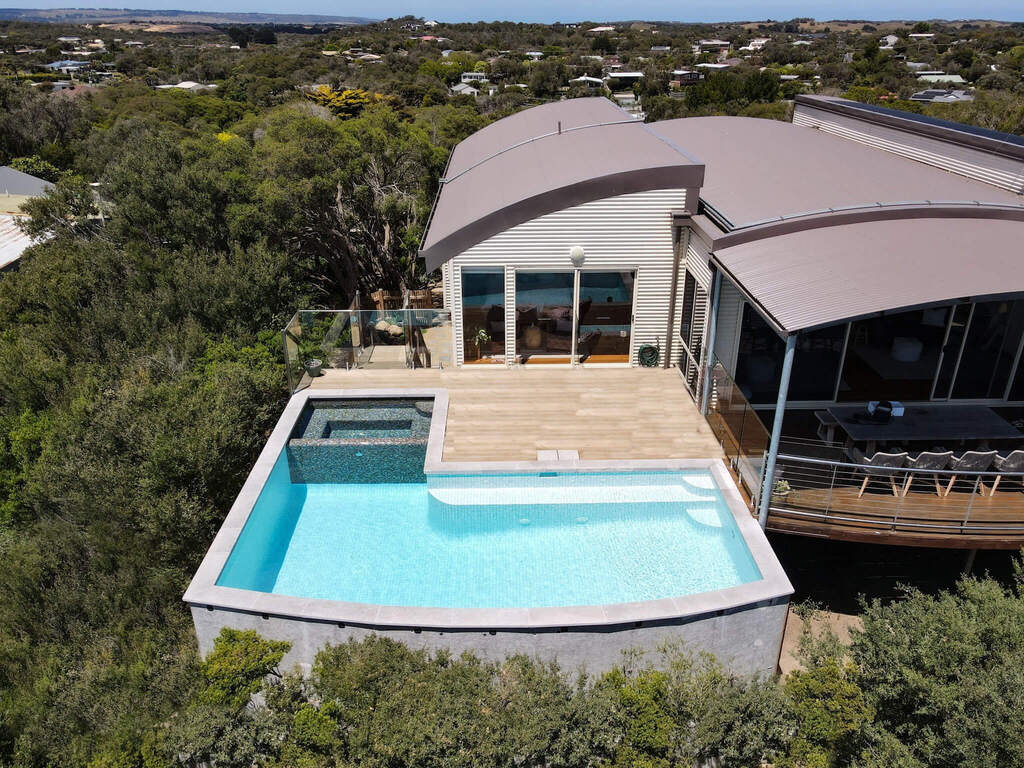
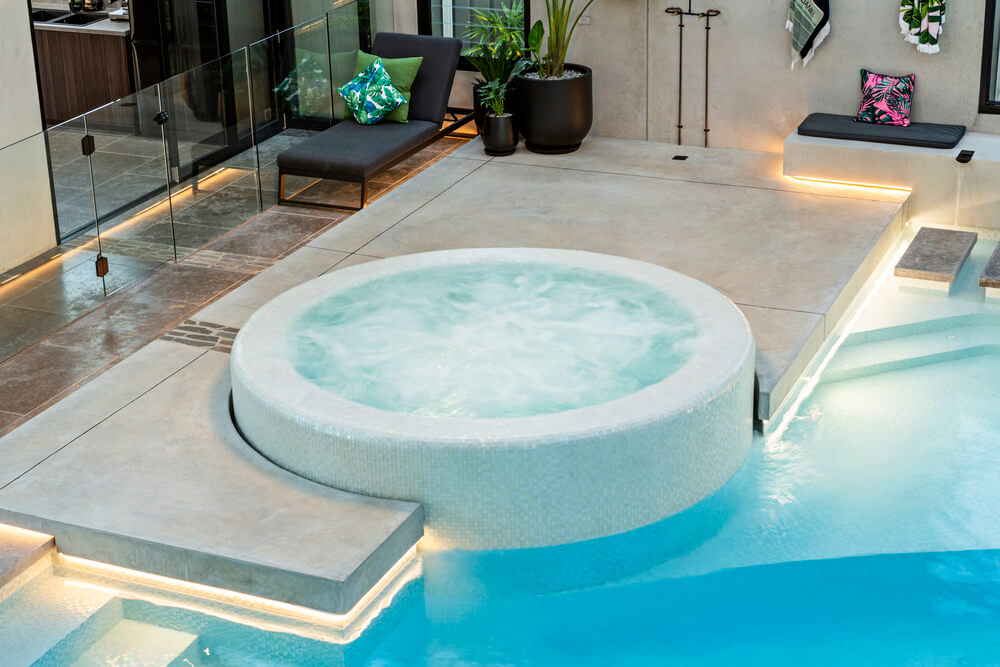
Striking Pools has completed bespoke concrete pool projects across commercial briefs such as boutique hotels and resort settings, implementing features like infinity edges, tiled finishes, and integrated water features while prioritising durable construction and maintainability. Each project brief was translated into concrete-grade selection, reinforcement detailing, and finish specifications that matched the owner’s aesthetic and operational priorities.
The implemented system automation, filtration, and cleaning were selected to match usage patterns, reducing maintenance labour and stabilising water chemistry. Project outcomes demonstrated that aligning high-end aesthetics with robust engineering yields facilities that both impress guests and perform reliably for operators.
How Have Clients Benefited from Durable, Low-Maintenance Commercial Pool Designs?
Owners of durable, low-maintenance commercial pools report lower recurring costs, reduced downtime, and improved guest satisfaction because water quality and amenity availability are more consistent. Design choices that stabilise chemistry, reduce mechanical wear, and simplify servicing translate directly into measurable benefits such as fewer emergency repairs, predictable annual maintenance budgets, and less staff time dedicated to cleaning. These operational improvements support higher facility availability and better guest reviews, which in turn contribute to brand perception and revenue stability.
For commercial organisations seeking a partner to deliver bespoke concrete pools with durability and low-maintenance operation, Striking Pools Pty Ltd provides tailored design and construction, integrated landscape architecture, ongoing pool care, and financing support, inviting property owners to request a consultation or quote for high-value commercial pool and spa projects.
For consultations, quotes, or to discuss bespoke commercial concrete pool and spa design and construction tailored to your property, contact Striking Pools Pty Ltd to start the process with a site-based consultation and a bespoke proposal suited to high-value commercial requirements.