Your concrete pool is a significant investment, one that deserves attentive, consistent care to keep it performing at its best. At the heart of that care is your filtration system, and if your pool is fitted with a cartridge filter, understanding how to maintain it properly is essential.
Regular, thorough cleaning of your pool cartridge filter not only protects your water quality but also extends the life of your equipment and reduces long-term costs.
Whether you manage your own pool maintenance or simply want to be better informed, this guide walks you through everything you need to know.
For personalised advice, contact our team at Striking Pools today.
How to Clean a Pool Cartridge Filter — in summary
- A pool cartridge filter traps debris, oils, and fine particles as small as 10 to 15 microns as water circulates through its pleated polyester surface
- Most cartridge filters should be rinsed every four to six weeks during regular use and given a deep chemical clean two to four times per year
- Soaking the cartridge in a pool-specific filter cleaner or degreaser solution for a minimum of eight hours is the most effective method for removing embedded oils, sunscreen residue, and fine particulate matter
- After soaking, the cartridge should be rinsed thoroughly until the water runs clear, then allowed to air dry where possible
- Before reassembling, the housing O-ring should be inspected for wear and lubricated if needed, and the cartridge itself checked for tears, cracks, or deformation
- Household detergents should never be used as a substitute for pool-specific cleaning products, and maintaining correct water chemistry reduces the overall load on the filter and supports consistent performance
What is a Pool Cartridge Filter and What Does it Do?
A pool cartridge filter is a type of pool filtration system that uses a pleated polyester or fabric cartridge element to trap debris, dirt, oils, and fine particles as water circulates through the system.
Unlike sand or diatomaceous earth filters, cartridge filters do not require backwashing, making them a popular and efficient choice for residential concrete pools and spas.
The cartridge element works by passing pool water through its fine, pleated surface, capturing contaminants as small as 10 to 15 microns, which is far smaller than what the naked eye can detect. This level of filtration is particularly valuable in a high-quality concrete pool environment where water clarity, hygiene, and chemical balance are priorities.
When a cartridge filter becomes clogged or dirty, water flow is restricted, the pump has to work harder, and water quality deteriorates. Algae growth, cloudy water, and skin or eye irritation are all potential consequences of a neglected filter.
Understanding how to clean a pool filter correctly is, therefore, not merely a matter of maintenance but of protecting the health and longevity of your entire aquatic environment.
Pool filtration systems are widely recognised as the cornerstone of effective water management, and the cartridge type is among the most efficient available for residential use.
How Often Should You Clean a Pool Cartridge Filter?
The frequency with which you need to clean your pool cartridge filter depends on several variables, including pool usage, the surrounding environment, and the time of year.
As a general guideline, most cartridge filters should be inspected and rinsed every four to six weeks during regular use, and given a deep chemical clean two to four times per year.
However, certain circumstances will require more frequent attention:
- Heavy pool use during warmer months increases the load of body oils, sunscreen, and organic matter entering the water
- Following storms or high winds that deposit debris, leaves, and dust into the pool
- If the pool is surrounded by trees, gardens, or landscaping that sheds regularly
- During periods of algae treatment or chemical shock dosing
- If you notice reduced water flow, increased pump pressure, or a change in water clarity
A good practical indicator is your filter’s pressure gauge. Most cartridge filter systems have a recommended operating pressure range, and a rise of 8 to 10 psi above the normal baseline is a reliable signal that cleaning is required. Consulting your filter manufacturer’s guidelines will give you the specific thresholds relevant to your equipment.
Maintaining effective filtration is a fundamental requirement for safe recreational water, reinforcing why staying on top of cartridge filter maintenance is so important.
What You Will Need
Before beginning, gather the following:
- Garden hose with a spray nozzle (not a high-pressure washer)
- Cartridge filter cleaner or degreaser solution (commercially available, pool-specific product)
- A large bucket or bin suitable for soaking
- Safety gloves and eye protection
- A soft brush (optional, for stubborn debris)
- Replacement O-ring lubricant (if reassembling with an O-ring)
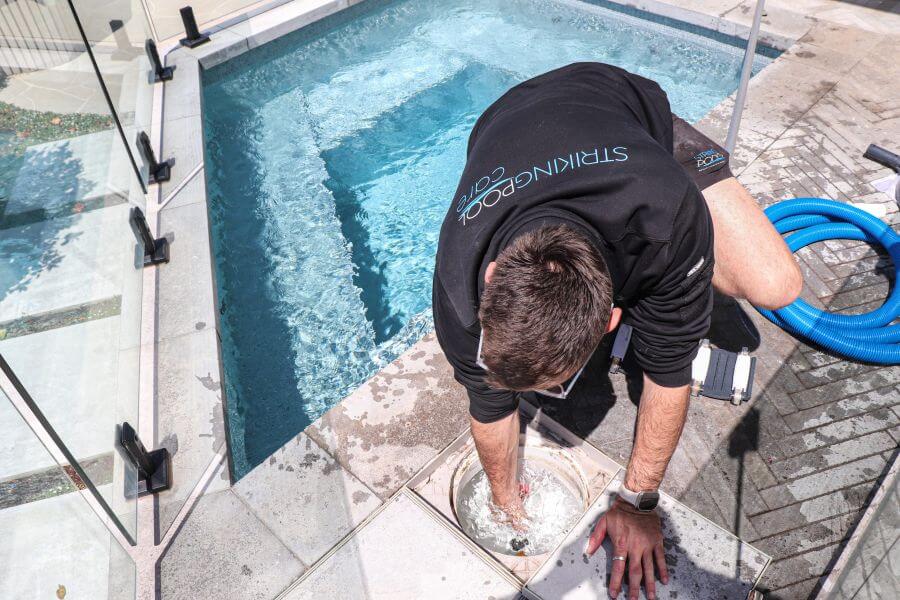
Step-by-Step: How to Clean a Pool Cartridge Filter
Step 1: Turn off the pool pump
Safety first. Before opening any part of the filter housing, ensure the pool pump is completely switched off. If your system has an air relief valve, open it to release any built-up pressure before proceeding.
Step 2: Remove the filter cartridge
Open the filter housing by unscrewing or releasing the clamps, depending on your system’s design. Carefully lift the cartridge element out and place it on a clean, flat surface. Take note of the cartridge’s orientation before removal so you can replace it correctly.
Step 3: Remove loose debris
Use your garden hose to rinse away large debris such as leaves, insects, and coarse dirt. Hold the hose at a 45-degree angle and work from the top of the pleats downward, being careful not to force debris deeper into the fabric. Do not use a high-pressure washer, as this can damage the delicate pleated material.
Step 4: Inspect the cartridge
With the surface debris removed, inspect the cartridge carefully. Look for tears, cracks, or deformations in the pleated material. Check the end caps and the core structure. If you notice significant damage or the cartridge has been in service for two to three years, it may be time to replace it rather than clean it. A compromised cartridge cannot filter effectively, no matter how thoroughly it is cleaned.
Step 5: Apply a cartridge cleaning solution
This is the step that many pool owners skip, but should not. A simple rinse with water alone will not remove the oils, sunscreen residue, and fine particulate matter that become embedded in the pleated fibres over time. Fill your bucket with water and add the recommended amount of a pool-specific cartridge filter cleaner or degreaser.
Submerge the cartridge fully and allow it to soak for a minimum of eight hours, or ideally overnight. This soaking process breaks down the oils, greases, and fine contaminants that hose rinsing alone cannot dislodge.
Research and industry guidance consistently show that chemical soaking is the most effective method for restoring filtration efficiency to cartridge elements.
Step 6: Rinse thoroughly after soaking
After soaking, remove the cartridge from the solution and rinse it thoroughly with your garden hose once again. Use the same gentle, angled technique as before. Continue until the rinse water runs clear and there is no residual foam or discolouration.
Step 7: Allow to dry (where possible)
If time permits, allow the cartridge to air dry completely before reinstalling it. This helps to expose and kill any remaining bacteria or algae spores. Ideally, rotate between two cartridges so that one is always clean and dry, ready to go, while the other is soaking or drying.
This practice is recommended by pool care professionals and significantly improves both hygiene and cartridge longevity.
Step 8: Reassemble and restart
Before reinstalling the cartridge, check the housing O-ring for signs of wear, cracking, or deformation. Apply a thin layer of appropriate O-ring lubricant if needed.
Reinsert the cartridge in the correct orientation, close the housing securely, and restart the pump. Open the air relief valve briefly to purge any trapped air, then confirm that the system is operating at the correct pressure.
Additional Tips for Long-Term Filter Performance
- Keep a maintenance log noting each cleaning date and the pressure readings before and after. This helps you identify patterns and plan ahead.
- Avoid using household detergents or dishwashing liquids, which can introduce foaming agents into your pool water.
- Replace your cartridge element every two to three years under normal conditions, or sooner if performance declines despite regular cleaning.
- Balance your pool water chemistry regularly. Correct pH, alkalinity, and sanitiser levels reduce the load on your filter and help it perform at its best.
Let Striking Pools Take Care of it For You
Maintaining a concrete pool and spa to the standard it deserves takes time, knowledge, and the right approach. If you would prefer the confidence of knowing your filtration system, water chemistry, and overall pool condition are in expert hands, the team at Striking Pools is here to help.
Striking Pools offers professional pool maintenance services tailored to the unique demands of concrete pools and spas. From routine filter servicing to comprehensive water management, the team brings the expertise and care your investment deserves.
Reach out today to discuss a maintenance plan that suits your pool, your lifestyle, and your standards.