If you have started researching a new pool, you have probably hit the same wall most homeowners do. Every builder says something different, the price ranges are enormous, and it is hard to know which advice is genuine and which is a sales pitch.
Here is the short answer to the concrete vs fibreglass pool question. Fibreglass is faster to install and cheaper upfront. Concrete costs more initially but gives you complete design freedom, premium finishes and a structure built to last for decades.
If you want a pool tailored precisely to your home, block and lifestyle, concrete pools are the stronger long-term investment. The detail below explains why.
Read on to Learn
- Fibreglass is faster and cheaper upfront; concrete costs more but is fully custom-built on site.
- Concrete offers unlimited size, shape and depth, while fibreglass is limited to factory moulds.
- A well-built concrete pool can last 50+ years and be renovated; fibreglass shells are replaced, not modified.
- Premium finishes like glass mosaic and natural stone make concrete pools an architectural feature that lifts property value.
- Fibreglass suits flat, accessible blocks; concrete suits sloping sites, tight access and bespoke designs.
- All Victorian pools must be registered with council and have a compliant safety barrier.
How a Concrete vs Fibreglass Pool Compares
Concrete pools are built on site to a custom design, while fibreglass pools are pre-moulded shells manufactured in a factory and craned into an excavated hole.
That single difference drives almost everything else, from cost and installation time to how the finished pool looks and feels.
| Feature | Concrete Pool | Fibreglass Pool |
|---|---|---|
| Design flexibility | Unlimited size, shape and depth | Limited to the manufacturer's moulds |
| Typical installed cost | $60,000 to $100,000+ | $30,000 to $50,000+ (in-ground) |
| Installation time | Around 3 to 6 months | A few days to a few weeks |
| Finishes | Tiles, render, glass mosaic, natural stone | Factory gel coat |
| Lifespan | 50+ years with proper care | 25+ years, but shell cannot be altered |
| Modifications later | Can be renovated and resurfaced | Changes usually mean full replacement |
The Many Benefits of a Concrete Pool
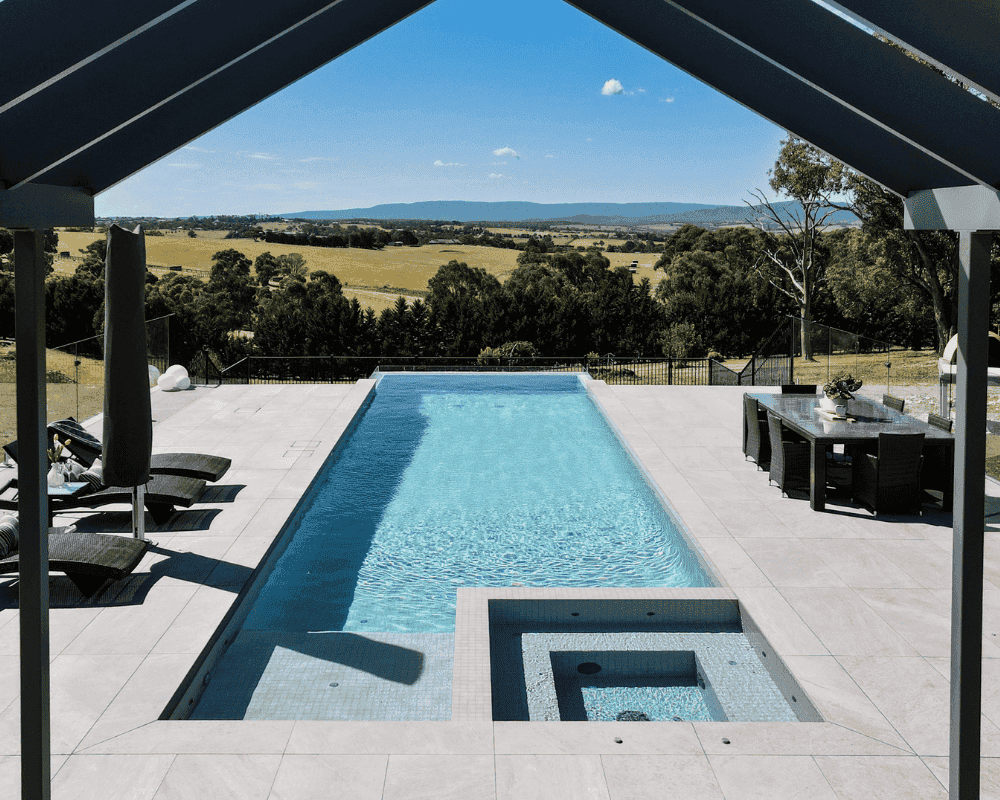
A concrete pool is engineered and poured on your property, so the design starts with your home rather than a catalogue. This is why architects and landscape designers almost always specify concrete for high-end projects. Three advantages stand out.
Complete Design Freedom
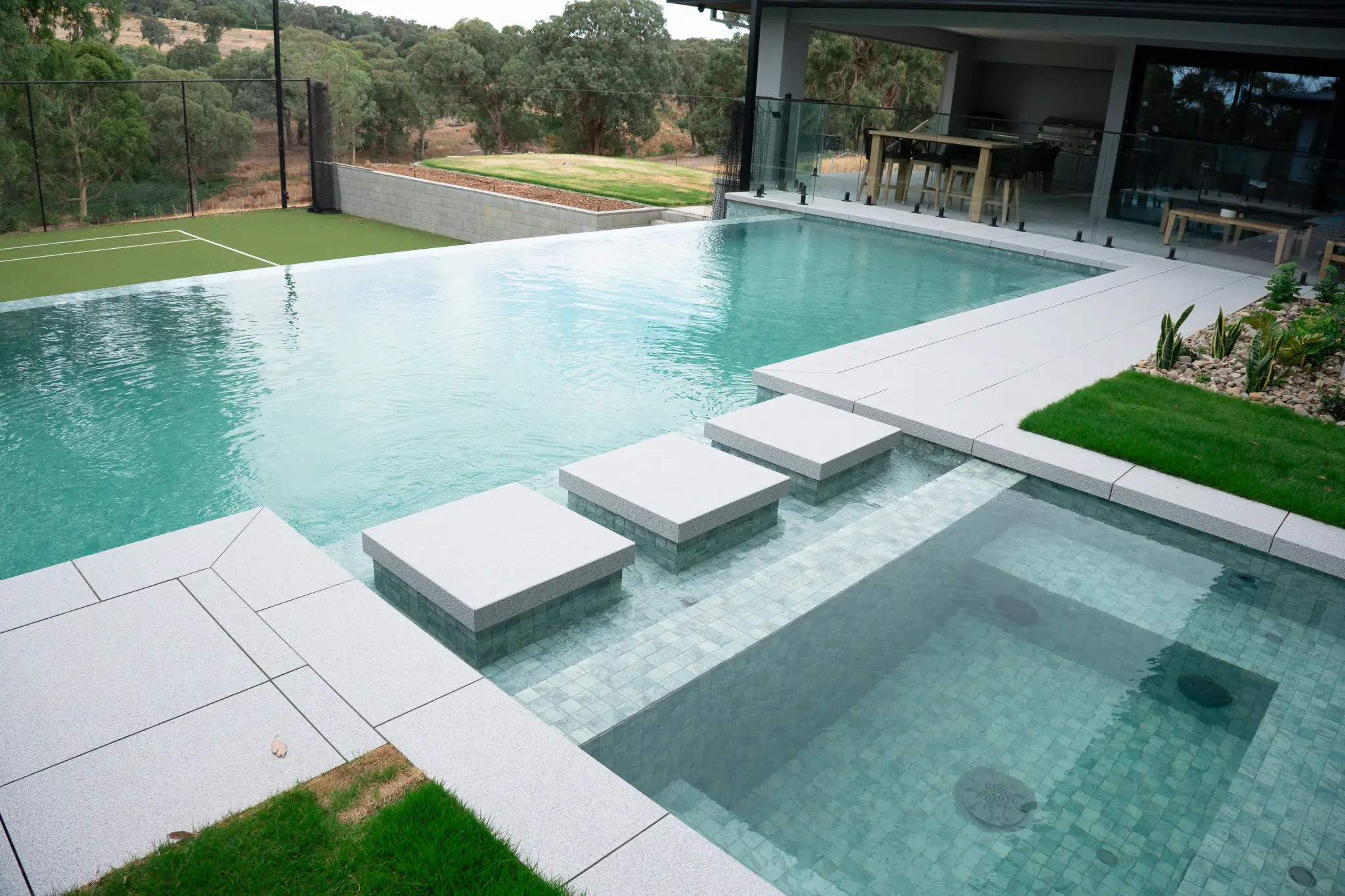
Because the shell is formed on site, a concrete pool can be any size, shape or depth. Infinity edges, acrylic windows, integrated spas, tanning ledges and wet decks are all achievable.
Striking Pools builds custom concrete swimming pools across Melbourne’s North-Eastern suburbs precisely because no two blocks, or clients, are the same.
Strength and Longevity
Concrete is a structural material designed to handle reactive soils, sloping sites and decades of Australian weather. A well-built and well-maintained concrete pool can last more than 50 years. Spread across that lifespan, the higher upfront cost becomes far easier to justify.
Premium Finishes That Lift Your Whole Property
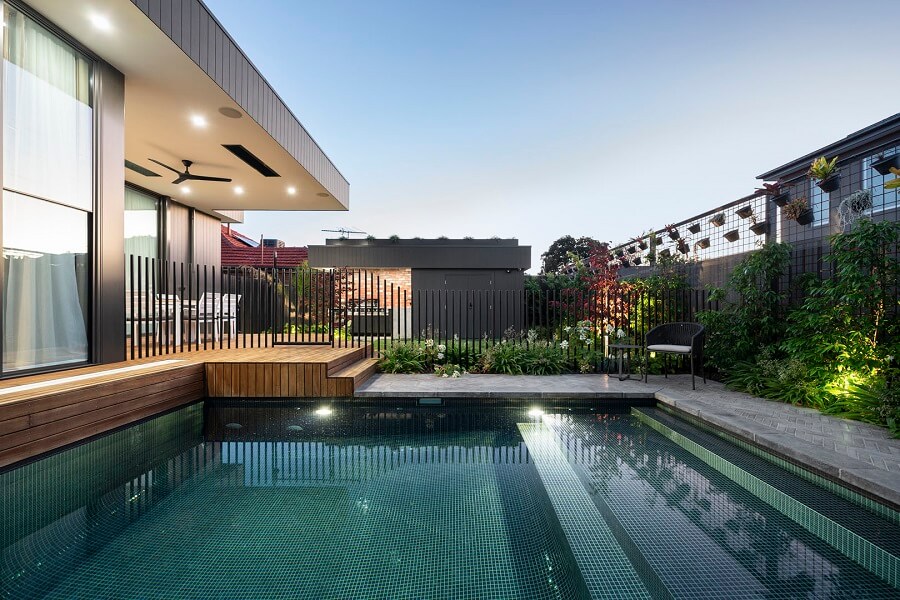
A concrete shell can be finished in ceramic mosaic, glass mosaic, crystal glass or natural stone, so the pool becomes an architectural feature rather than an addition.
Paired with considered landscaping, it can transform how your outdoor space looks, functions and ultimately values.
‘Most of our clients are not buying a pool for next summer. They are investing in the next twenty years of their home, and concrete is the only option that genuinely delivers on that timeframe’.
– Liam Sierakowski, Construction Manager
Where Fibreglass Pools Hold Their Own
Fibreglass pools suit homeowners who want a pool quickly and at a lower entry price. The shell arrives pre-built, so installation can take weeks rather than months, and the smooth gel coat surface resists algae, which keeps routine maintenance simple.
The trade-off is flexibility. You are limited to the shapes and sizes in a manufacturer’s range, transport can restrict how large the shell can be, and the pool cannot be modified once installed.
If you later want it deeper, larger or refinished, the realistic option is replacement. For a straightforward rectangular pool on an accessible flat block, fibreglass can be a sensible choice. For anything bespoke, it quickly runs out of room.
Costs, Compliance and What to Plan for
Beyond the build price, every Victorian pool carries the same legal obligations regardless of material.
According to the Victorian Building Authority, all pools and spas capable of holding more than 30cm of water must be registered with your local council and protected by a compliant safety barrier, with a barrier compliance certificate lodged every four years.
Budget should also account for site access, excavation, fencing, landscaping and equipment. An experienced builder will map these costs before you sign anything, which is where a boutique team adds real value.
Striking Pools manages pool and spa design, engineering, construction and landscaping in-house, so Melbourne clients get one accountable team from concept to completion, with flexible pool finance options available.
Common Questions About Concrete and Fibreglass Pools
What is the most luxurious pool finish?
Fully tiled finishes sit at the top, with hand-set glass mosaic and natural stone considered the most premium. They deliver depth of colour, a seamless look and a lifespan that outlasts rendered or pebble interiors.
Is it better to have a dark pool or light pool?
It depends on the look you want. Dark interiors create a moody, reflective, lagoon-style finish and absorb more heat, while light interiors show off clear blue water and make the pool feel bigger and brighter.
What pool type adds the most home value?
A well-designed concrete pool typically adds the most, because it is custom-built to the property and finished to a higher standard. Poor design or cheap finishes can have the opposite effect, regardless of pool type.
What are the disadvantages of a concrete pool?
The main trade-offs are a higher upfront cost and a longer build time of around 3 to 6 months. Concrete is also porous, so it needs periodic resurfacing and slightly more attention to water chemistry than fibreglass.
What is the downside of a fibreglass pool?
You are limited to the shapes, sizes and depths in a manufacturer’s range, and the shell cannot be modified once installed. Site access can also restrict how large the pool can be, since the shell must be craned in as one piece.
Experience the Difference of a Truly Custom Pool
Both pool types can serve a family well, and the honest answer is that the right choice depends on your block, your budget and how much of your own vision you want in the finished result.
If speed and entry price matter most, fibreglass does the job. If you are investing in a pool you will still love in twenty years, one shaped around your home rather than squeezed into it, concrete is hard to beat.
That is exactly what Striking Pools has built its reputation on. As multi-award-winning concrete pool builders in Melbourne’s North-Eastern suburbs, our team designs, engineers and constructs bespoke concrete pools, spas and surrounding landscapes as one seamless project.